

The Super Bowl Paradox
What happens to the warriors who give us our Sunday spectacle when Monday morning comes?

Next Sunday, roughly half the country will stop what it’s doing and pay attention to the same thing at the same time. That alone makes the Super Bowl unusual in modern American life.
More than 120 million Americans will tune in to Levi’s Stadium in Santa Clara, California, where the Seattle Seahawks and New England Patriots will meet in Super Bowl LX—a rematch eleven years in the making. Both teams finished 14–3. Seattle arrives as the NFC’s top seed, chasing its second championship and first since 2014. The Patriots will make a record-extending twelfth Super Bowl appearance, seeking an unprecedented seventh title, this time without Tom Brady or Bill Belichick.
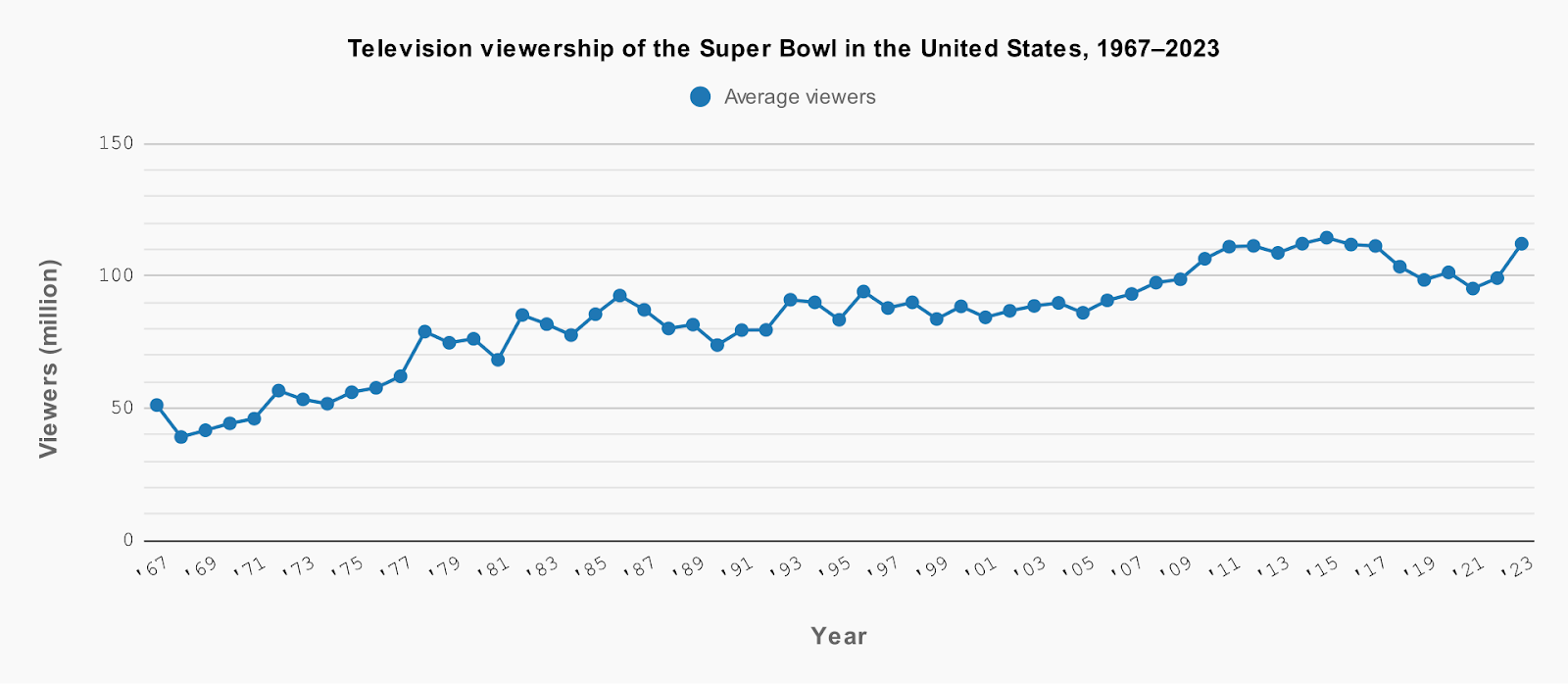
Last year’s Super Bowl drew a record 127 million viewers, surpassing the previous year’s mark of 123 million. No other event in American life commands that kind of attention anymore. In a fragmented media environment, the Super Bowl remains the last true monoculture moment.
And that’s where the paradox begins.
The same event that unites tens of millions of people around a shared experience also concentrates extraordinary wealth, attention, and economic activity into a single night while obscuring what happens to many of the people who make that spectacle possible once the cameras shut off and the crowd goes home.
The Super Bowl asks almost nothing of us beyond showing up. But what it produces—and what it leaves behind—reveals far more about how we value performance, community, and responsibility in modern America.
The Attention Economy
A 30-second advertisement during the Super Bowl now costs about $7 million—roughly $230,000 per second. Total ad revenue for the broadcast is expected to exceed $600 million.
And that figure understates the real cost. By the time brands account for celebrity talent, production, teaser campaigns, social amplification, and post-game PR, a single Super Bowl ad can cost between $15 and $25 million all-in. For many companies, that exceeds what they spend on advertising for an entire quarter.
More than half of viewers say they watch the Super Bowl primarily for the commercials.
This is attention at its most concentrated and most expensive.
Food
The Super Bowl also produces one of the most concentrated bursts of consumption in the American economy. Super Bowl Sunday is the second-largest food consumption day of the year, behind only Thanksgiving.
Americans will spend an estimated $15 to $17 billion on food, drinks, and wagers over the course of a single afternoon and evening. Roughly 50 million pizzas will be ordered. About 1.4 billion chicken wings will be consumed. Sales of avocados, beer, soda, and dips surge well beyond normal patterns.
Fans spend an average of $58 per person on food and beverages alone.
Cost of Attendance
The Super Bowl remains one of the most coveted tickets in sports and entertainment. According to resale data reviewed by USA Today the cheapest single ticket this year—located in the uppermost sections of the stadium—costs between roughly $6,200 and $7,200, depending on the platform.
That’s more than $1,000 higher than last year’s cheapest resale ticket. Over the past five Super Bowls, average ticket prices have ranged from about $8,000 to over $12,000.
Prediction Markets
The Super Bowl has become one of the largest betting events in the world. An estimated $25 to $30 billion will be wagered globally—both legally and illegally—a figure that continues to grow as sports gambling becomes more normalized in the United States through platforms like DraftKings, Kalshi, and Polymarket.
Bets are placed not only on the outcome of the game, but on the coin toss, the length of the national anthem, the color of the Gatorade bath, and details of the halftime show.
As I remind my 16-year-old son Jack, an avid sports fan, there’s a reason Vegas, Atlantic City, and even our Parx Casino in Bucks County are so big and bright: the house usually wins.
As Scott Galloway writes in Notes on Being a Man, 28.2% of boys aged 16 have gambled in the past year. That statistic alone suggests a growing need for awareness and education—before gambling shifts from entertainment to something far more harmful.
Halftime Show
The Super Bowl halftime show has become one of the most powerful cultural platforms in the world, routinely drawing an audience of more than 100 million viewers - often rivaling, and sometimes exceeding, the game itself. This year’s headliner, Bad Bunny, will make history as his music is almost entirely in Spanish.
To many people’s surprise, performers are not paid traditional appearance fees. The NFL typically only covers production costs and pays union scale (around $1,000 per day), but they gain massive exposure, album sales, and brand boosts. In the hours and days following the performance, streaming numbers can jump anywhere from 200 to 1,000%. Tour ticket demand spikes. Entire back catalogs reenter the charts. The exposure is often worth tens of millions of dollars.
Why I’ll be at Super Bowl Weekend
Host cities love to sell the Super Bowl as an economic moonshot—projections routinely land between $500 million and north of $1 billion. That belief is exactly why I fought so hard to bring the Army–Navy Game to Philadelphia (we hosted it four of the five years I was at the Pentagon).
But the real impact isn’t confined to the stadium. It lives in the shoulder events, the programming, the dealmaking, and the relationships formed in rooms far from kickoff. Sports is big business—and the athletes at the center of it aren’t just talent, they’re operators.
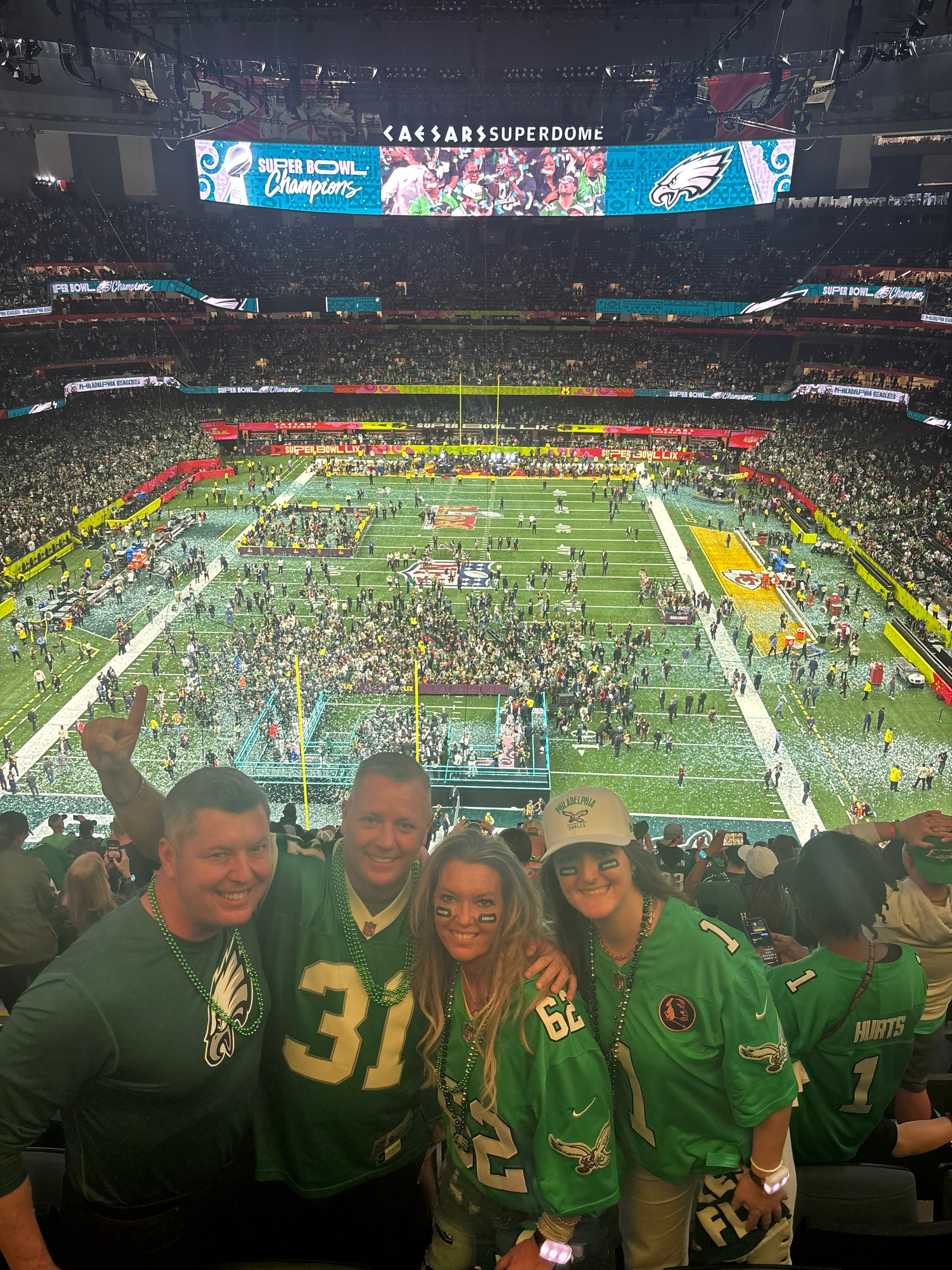
I’ve been lucky enough to attend three Super Bowls. This year, I won’t be at the Big Game itself, but I’ll be in Santa Clara for the festivities starting Thursday.
The weekend kicks off at an opening-night event called “the People’s Party” hosted by Justin Pugh, an 11-year NFL veteran and Bucks County native who was once my constituent, along with his business partner, Alex Yungvirt. (Justin was the 19th overall draft pick in 2013 by the Giants, but I won’t hold that against him.)
What draws me to Justin's work isn't just his career on the field—it's his mission off it: helping athletes avoid going broke by teaching them basic financial literacy and business acumen. He and Alex co-founded Athlete+Us to help athletes own their platform, their economics, and their next chapter. The same way I work with veterans and students at Wharton, Justin works with athletes across all sports.
Projects like his YouTube series, Thursday Football Club, reflect that mindset. The meetups, the conversations, the content - it’s not branding fluff. It’s athletes operating with intention, control, and respect for the business they’ve spent years building.
If you haven’t checked it out yet, start there. It’s a masterclass in what happens when sports, media, and business are treated with the same seriousness as the game itself.
What Happens When the Lights Go Off
Elite athletes and veterans have more in common than you’d think. Both are world-class operators, forged by years of discipline and sacrifice. And both face transitions that can make or break them.
For football players, fewer than 0.02% of high school athletes will ever make it to the NFL. Even among those who do, the average career lasts just 3.3 years. As the saying goes, the NFL often stands for “Not For Long.” Roughly 78% of former NFL players face financial difficulties.
Just last month, former Philadelphia Eagles defensive lineman Kevin Johnson was found dead in a homeless encampment in Los Angeles.
Under Commissioner Roger Goodell, the NFL has made real progress supporting athletes through transitions. But too many still fall through the cracks.
The same is true for my fellow veterans.
We remain extraordinary civic assets—more likely to be employed, start businesses, vote, and volunteer. But the dark side is devastating. The veteran suicide rate is 60% higher than the national average. Since 9/11, more than 125,000 veterans have taken their own lives. Forty percent had no diagnosed mental health or substance-abuse disorder.
Transitions can be life or death.
I’ve seen this firsthand—in office, at the Pentagon, and long after leaving government. Many of us live with survivor’s guilt when the brothers and sisters we love don’t make it.
That’s why, beyond teaching veterans and athletes at Wharton and helping more than 85,000 transitioning service members through Hiring Our Heroes, I’m national co-chair of Face the Fight—an initiative uniting more than 250 partners to dramatically reduce veteran suicide by 2032. It’s free to join. It saves lives.
As a former college hockey player, I’m honored to serve on the Philadelphia Flyers Warriors board. We have more than 140 veteran hockey players competing against other NHL Warriors teams. I’ve skated with them, cheered them on, and shared plenty of locker-room chirps - always my favorite part.
Last week, we lost one of our rivals from the Pittsburgh Penguins Warriors: Sean O’Rourke, a 46-year-old Army and Iraq veteran. Sean was their team captain - gritty, quick with the chirps - and he leaves behind his wife Tori Schuster and their sons, Parker, Brooks, and stepson Logan.
There’s a GoFundMe for his family if you’d like to join me in giving.
Enjoy the game. Enjoy the belonging, the hysterical commercials, and the Buffalo wings.
But don’t forget: when the lights go off, many of these elite warriors could really use our help.
Great piece but perhaps missing another important narrative who are the people who serve the food, clean the stadium who are now being told ICE will showing up… ? Or who are boycotting because Bad Bunny is Latino, so many threads…
Great!!!! Detailed!!!! Support 🫶🙌👍💪